
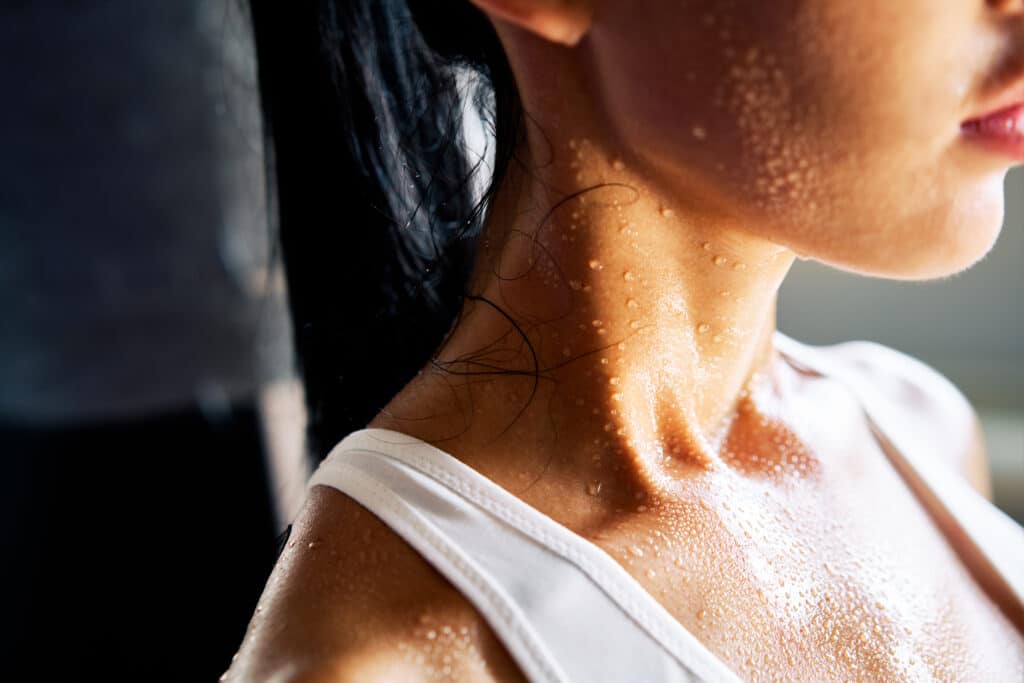
Sweating is a normal way for the body to regulate temperature, especially during exercise, warm weather, or stressful situations. Excessive sweating, however, can happen even when the body doesn’t need extra cooling and may interfere with everyday activities, clothing choices, work, or social situations.
At Musick Dermatology & Advanced Clinical Spa in Swansea, IL, Dr. Steven Musick is a board-certified dermatologist with decades of experience diagnosing and treating skin disorders. When sweating seems frequent, hard to control, or out of proportion to the situation, a dermatologic evaluation can help determine whether hyperhidrosis or another underlying issue is involved.
What Is Hyperhidrosis?
Hyperhidrosis is a condition that causes sweating beyond what is necessary for normal temperature regulation. It may affect specific areas of the body or occur more broadly.
Common areas include:
- Underarms
- Palms
- Soles of the feet
- Face or scalp
- Groin
Primary focal hyperhidrosis often affects both sides of the body and may begin earlier in life. Secondary hyperhidrosis can develop because of another medical condition or certain medications.
Signs Sweating May Be More Than Heat-Related
Sweating from hot weather or exercise usually improves once the trigger passes. Excessive sweating may be more concerning when it:
- Happens in cool environments
- Occurs without physical activity
- Soaks through clothing regularly
- Makes it difficult to hold objects or use electronics
- Causes frequent skin irritation
- Disrupts sleep or daily routines
Sudden changes in sweating patterns may also deserve medical attention, especially when they occur along with other new symptoms.
Why an Evaluation Matters
Not every case of excessive sweating has the same cause. A dermatologist may ask when the sweating began, where it occurs, whether it happens during sleep, and whether medications or health conditions could be contributing.
The goal is to distinguish primary hyperhidrosis from sweating related to another issue. Treatment recommendations can then be tailored to the underlying cause and symptom severity.
Treatment Options for Hyperhidrosis
Management depends on the affected area and how much sweating interferes with daily life. Options can include prescription-strength antiperspirants, topical medications, oral medications, and injectable treatments such as BOTOX, which can help reduce sweating by temporarily blocking the nerve signals that activate sweat glands.
The best treatment plan depends on symptoms, medical history, and previous approaches.
Get Help for Excessive Sweating in Swansea, IL
Don’t dismiss excessive sweating as simply “running hot.” When perspiration becomes frequent, unpredictable, or disruptive, hyperhidrosis may be worth evaluating.
To discuss excessive sweating with a dermatology provider at Musick Dermatology & Advanced Clinical Spa in Swansea, IL, call 618-628-2588 to schedule a consultation.